7 Things You Should Know Before Buying A Jetski

Buying a jet ski is an exciting purchase, but it's also an easy one to get wrong. Between engine types, service history and hidden finance owing, there's more to check than most first-time buyers expect. Here's what to work through before you hand over any money.
Run A PPSR Encumbrance Check First
Buying a jet ski comes with one risk that's easy to overlook: the possibility that money is still owed on it by a previous owner. A $2 search on the Personal Property Securities Register (PPSR) tells you whether the jet ski has a security interest registered against it. The New Zealand Government runs this service specifically so buyers can check whether a vessel has finance owing before they commit to buying it. The purpose of the PPSR is to protect buyers from unnecessary financial loss. If you buy a jet ski without knowing it's financially encumbered, it can legally be repossessed after the sale, and you'd lose your investment along with it. At only $2, there's no good reason to skip this step, and no need to pay more for it through a third-party service either.
Two-Stroke Or Four-Stroke: Which Engine Do You Need?
Used jet skis on the market will have either a two-stroke or a four-stroke engine. Two-strokes were the industry standard for years until four-stroke models arrived in the early 2000s, and both types still circulate on the second-hand market today.
Four-stroke engines generally have the edge: they're more fuel efficient, more environmentally friendly, quieter, and considered more durable than their two-stroke counterparts. They're also easier to service and source parts for, since four-strokes are now the dominant engine type and two-strokes are gradually being phased out of the market.
Ask For The Full Service History
Before buying a used jet ski, ask the seller for the service logbook. Find out how often it's been serviced, what repairs have been carried out, and whether any parts have been replaced. A jet ski that's been serviced regularly by a professional jet ski mechanic gives you far more confidence than one with a patchy or undocumented history.
Check The Engine Hours Against Its Age
Engine hours matter just as much as the model year. On average, an owner uses their jet ski for around 30 hours a year, so a two-year-old jet ski with roughly 60 engine hours is tracking normally. If you find one with significantly more hours than its age suggests, its engine life may be shorter than you'd expect. As a general guide, a four-stroke jet ski can be expected to run for somewhere between 300 and 500 engine hours in total.
Carry Out A Pre-Purchase Inspection
Before you commit to buying, go through the jet ski carefully. At a minimum, check:
- Any signs of rust or corrosion
- The compression and pump for damage
- The supercharger, if the model has one
- The hull for dents or scratches
- The seats for tears or cracks
- The battery, since jet ski batteries typically last three to five years
Take It For A Test Drive In The Water
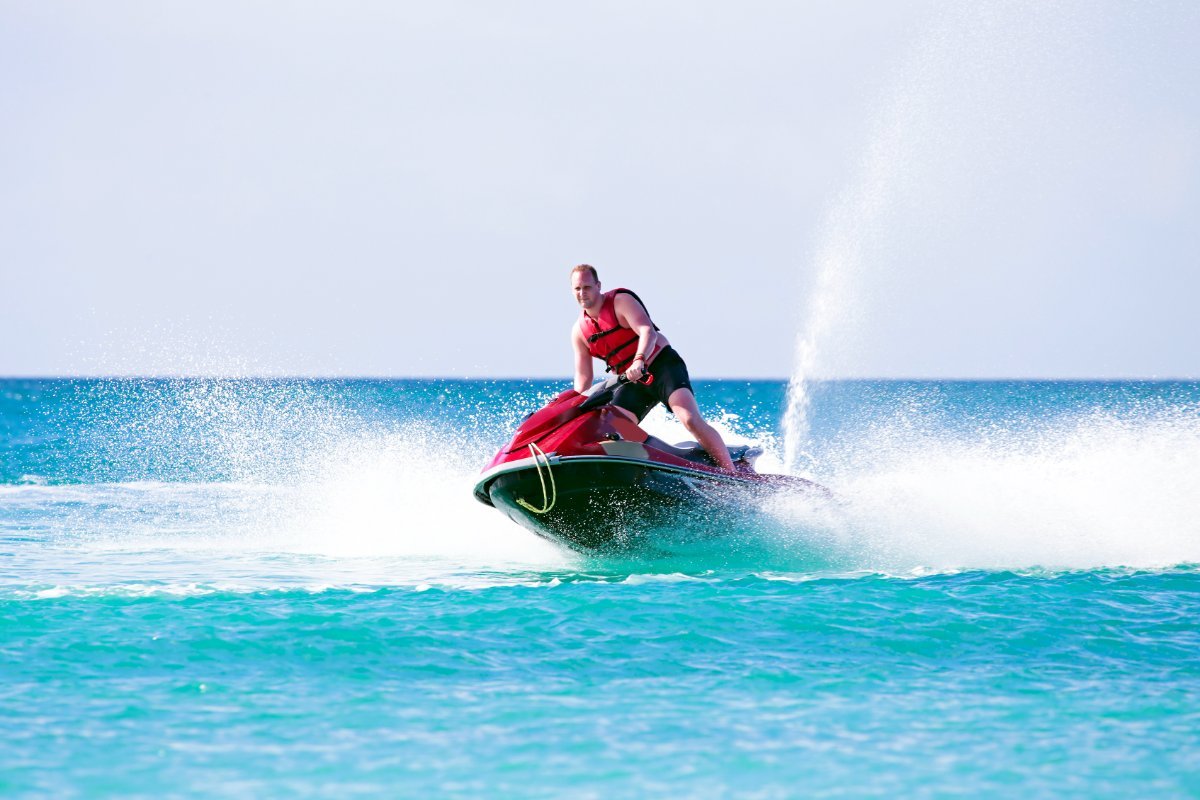
A jet ski can run fine sitting on a trailer and behave quite differently once it's in the water, so a test drive is essential. Check that no warning lights appear and that all gauges function properly. At full throttle, the jet ski should maintain healthy RPMs, usually somewhere above 7,000, though this varies by model. After the test drive, check under the seat for water in the hull. A small amount is normal, but a significant amount can indicate a problem worth investigating further.
Check The Trailer As Well As The Jet Ski
If a trailer is included in the sale, inspect it with the same care as the jet ski itself. Check the wheel bearings, winch straps, bunks, carpet, bolts, and trailer and brake lights. Test the lights to confirm they're all working, check that the wheel bearings are properly greased, and look over the bunks and carpet for wear. A well-maintained trailer is worth just as much peace of mind as a well-maintained jet ski.
Budget For The Extra Costs
The purchase price is rarely the full cost of jet ski ownership. Leave room in your budget for:
- Registration
- Insurance
- Trailer costs, if not already included
- Ongoing maintenance and servicing
- Accessories such as anchors, tow ropes, covers and life jackets
A jet ski is a big enough purchase that it deserves a proper process, not just a quick look and a handshake. Run the PPSR check, understand the engine, check the history and hours, inspect it thoroughly, and take it for a proper test drive before you commit.
Ready to start looking? Browse current jet skis for sale on Boats Online to compare your options.

Frequently Asked Questions
What is a PPSR check and why does it matter when buying a jet ski?
A PPSR check searches the Personal Property Securities Register to confirm whether a jet ski has a security interest registered against it, meaning money may still be owed on it. It costs around $2 and protects you from buying a jet ski that could legally be repossessed after you've paid for it.
Is a four-stroke jet ski better than a two-stroke?
Four-stroke jet skis are generally considered the better option, since they're more fuel efficient, quieter, more environmentally friendly and more durable than two-stroke models. They're also easier to service, as four-strokes are now the dominant engine type on the market.
How many engine hours is normal for a used jet ski?
An average owner uses a jet ski for around 30 hours a year, so a two-year-old jet ski with roughly 60 engine hours is in line with normal use. A four-stroke jet ski can generally be expected to last between 300 and 500 engine hours overall.
What should I check during a jet ski test drive?
During a test drive, check that no warning lights appear, that all gauges work correctly, and that the jet ski holds healthy RPMs at full throttle, usually above 7,000 depending on the model. Afterwards, check under the seat for any significant water in the hull.
What extra costs should I budget for after buying a jet ski?
Beyond the purchase price, budget for registration, insurance, ongoing maintenance and servicing, and accessories such as anchors, tow ropes, covers and life jackets, along with trailer costs if one isn't already included.